
Gutter scoops are among the most common and essential tools for gutter cleaning. Their curved design fits inside gutter troughs, making it easy to remove leaves, mud, pine needles, and compacted debris efficiently. Most gutter scoops are made from durable plastic or lightweight metal, offering enough strength to handle heavy buildup without damaging protective gutter finishes. Their shape allows access to corners and tight sections that hoses and blowers often cannot clear.
Many models include drainage holes that allow water to escape while retaining solid debris, reducing mess and speeding up cleanup. For homes with frequent leaf buildup, a quality gutter scoop remains one of the most effective and reliable tools available.
Tools for Gutter Cleaning: The Ultimate 2026 Guide
Cleaning your gutters is one of the most important home maintenance tasks, yet it is often overlooked until serious problems occur. Gutters clogged with leaves, twigs, dirt, and debris can cause water to overflow, seep into roofing and siding, damage foundations, and create ideal conditions for pests.
Using the right gutter cleaning tools makes the job faster, safer, and far more effective. In this comprehensive guide, we cover essential gutter cleaning tools, from basic manual options to professional-grade equipment, along with guidance on how to choose and maintain them properly.
Why Proper Gutter Cleaning Tools Matter
Using the right tools for gutter cleaning is about more than convenience. It directly affects safety, cleaning effectiveness, and long-term protection of your home. Gutters collect rain runoff along with debris from nearby trees and rooftops, which can quickly lead to blockages if not removed properly.
Without purpose-built tools, homeowners often rely on improvised methods such as garden trowels or bare hands. These approaches can damage gutter finishes, leave compacted debris behind, and increase the risk of injury. Gutter-specific tools are designed to match standard gutter profiles, allowing thorough debris removal without scratching or bending the system.
Well-designed tools also reduce safety risks. Many modern solutions allow homeowners to clean gutters from the ground using telescopic wands, vacuum extensions, or blower attachments, minimizing ladder use. Preventing clogs helps avoid water overflow that can damage roof edges, siding, landscaping, and foundations, often resulting in costly repairs.
Gutter Scoops: The Foundation of Gutter Cleaning
Telescopic Gutter Wands: Clean Without Climbing
Telescopic gutter wands attach to standard garden hoses and extend reach, allowing gutters to be flushed from the ground instead of from a ladder. These tools are typically constructed from lightweight aluminum or fiberglass and can extend 10 to 20 feet or more.
Adjustable spray nozzles provide control over water pressure and direction, making telescopic wands ideal for flushing fine sediment after larger debris has been removed. Angled tips help direct water into the gutter while minimizing splashback onto siding or windows.
When used properly, telescopic gutter wands significantly reduce ladder use while improving cleaning efficiency and overall safety.
Debris Grabber Tools: Precision Removal
Debris grabber tools function as long-reach tongs designed for precise removal of leaves, twigs, and debris from hard-to-reach sections of gutters. They are especially useful near gutter hangers, spikes, and narrow sections. While gutter scoops handle bulk debris removal, grabber tools allow targeted cleanup of stubborn clogs. They are well suited for homes with complex rooflines, multiple bends, or tight gutter runs. Used together, scoops and grabbers provide both speed and accuracy during cleaning.
Wet and Dry Vacuums with Gutter Attachments: Suction Power
Wet and dry vacuums equipped with gutter attachments offer a contained and efficient cleaning method. Instead of scooping debris manually, strong suction pulls leaves, dirt, and wet material directly into the vacuum canister. This approach works particularly well in wooded areas or wet climates where debris becomes compacted inside gutters. Vacuum systems reduce ground mess and limit ladder exposure. Although they require a higher upfront investment, the time savings and safety benefits make them a popular choice for thorough gutter maintenance.
Leaf Blowers with Gutter Attachments: Fast Cleanup
Leaf blowers are effective for removing dry leaves and lightweight debris from gutters. With gutter-specific attachments, airflow is redirected into the gutter, pushing debris out quickly and efficiently. This method works best during dry conditions and seasonal maintenance cleanings. While blowers are not ideal for wet or compacted debris, they are useful for keeping gutters clear between deeper cleanings.
Pressure Washers with Gutter Attachments: Deep Cleaning Power
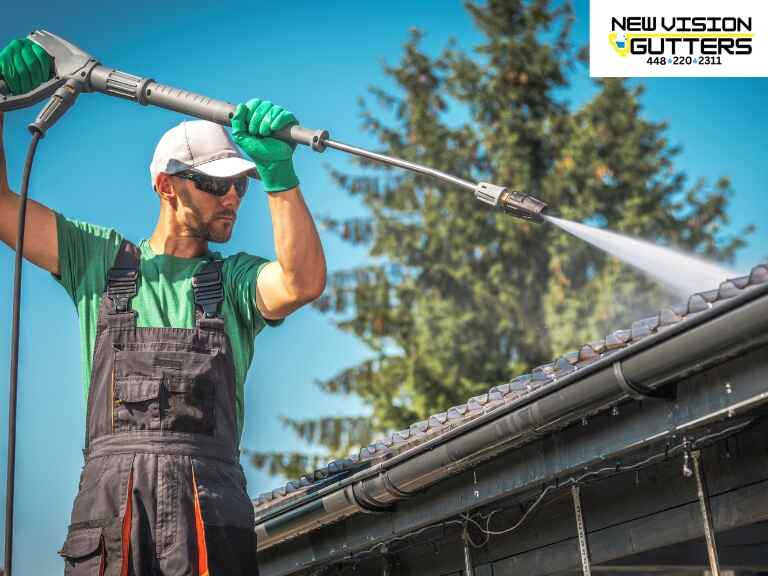
Pressure washers provide powerful cleaning capability when paired with gutter specific attachments. They can loosen stubborn grime and flush debris from gutters that have not been cleaned regularly. Moderate pressure settings should always be used to avoid damaging seams or forcing water behind siding. Pressure washing is best reserved for heavily soiled gutters or systems with long-term buildup that standard tools cannot remove effectively.
Gutter Brushes and Scrub Tools: Final Cleanup
After removing bulk debris, gutter brushes and scrub tools help eliminate fine sediment, residue, and cobwebs. Many brushes attach to extension poles, reducing ladder repositioning during cleaning. This finishing step ensures gutters are not only clear but truly clean, promoting proper water flow and reducing future blockages. A final rinse with a hose or gutter wand completes the process.
Safety Gear You Should Not Ignore
Safety gear is essential during gutter cleaning. Heavy-duty gloves protect hands from sharp debris and bacteria, while safety goggles shield eyes from airborne particles. Non-slip footwear improves stability on ladders and uneven ground. Ladder stabilizers help prevent slipping and reduce pressure on gutter edges. Ladders should always be placed on firm, level ground with proper contact maintained at all times.
How to Choose the Right Gutter Cleaning Tools
Choosing the right gutter cleaning tools depends on home height, debris type, cleaning frequency, and budget. Single-story homes with light debris may require only basic tools, while multi-story homes or wooded properties benefit from advanced equipment that reduces ladder use. Durable, ergonomic tools reduce fatigue and improve long-term reliability. Investing in quality equipment often results in safer, faster, and more effective maintenance.
Maintaining Your Gutter Cleaning Tools
After each cleaning session, tools should be rinsed and dried to prevent buildup and corrosion. Handles, bristles, and moving components should be inspected regularly for wear. Storing tools in a dry, organized space extends their lifespan. Light oiling of moving parts helps maintain smooth operation and reliable performance.
Frequently Asked Questions
How often should gutters be cleaned?
Most homes should clean gutters at least twice per year, typically in the spring and fall. Homes with heavy tree coverage may require more frequent cleaning.
Can gutters be cleaned without a ladder?
Yes. Telescopic wands, vacuum extensions, and blower attachments allow many homeowners to clean gutters from the ground.
Are professional tools worth the cost?
Professional-grade tools save time and provide deeper cleaning, especially for homes with heavy debris buildup.
Do gutter guards eliminate cleaning?
Gutter guards reduce debris accumulation but still require periodic maintenance.
Conclusion
Using the right tools for gutter cleaning turns a difficult and risky task into a manageable part of routine home maintenance. From scoops and wands to advanced vacuum and pressure washer systems, proper equipment protects your home from water damage and extends gutter lifespan. With the right tools and consistent upkeep, gutter maintenance becomes safer, more efficient, and far more effective year after year.